

A Conventional Path—At First
Before the fame, before the headlines, and long before he became the unmistakable voice of The Rolling Stones, Mick Jagger was living a life that looked surprisingly ordinary. Born Michael Philip Jagger in Dartford, England, he grew up in a middle-class family where expectations leaned toward stability, education, and a respectable career.
In fact, Jagger was studying economics at the London School of Economics—a path that suggested a future far removed from rock stages and roaring crowds. There was nothing in that early trajectory that pointed clearly toward global superstardom.
And yet, beneath that conventional surface, something else was already forming.
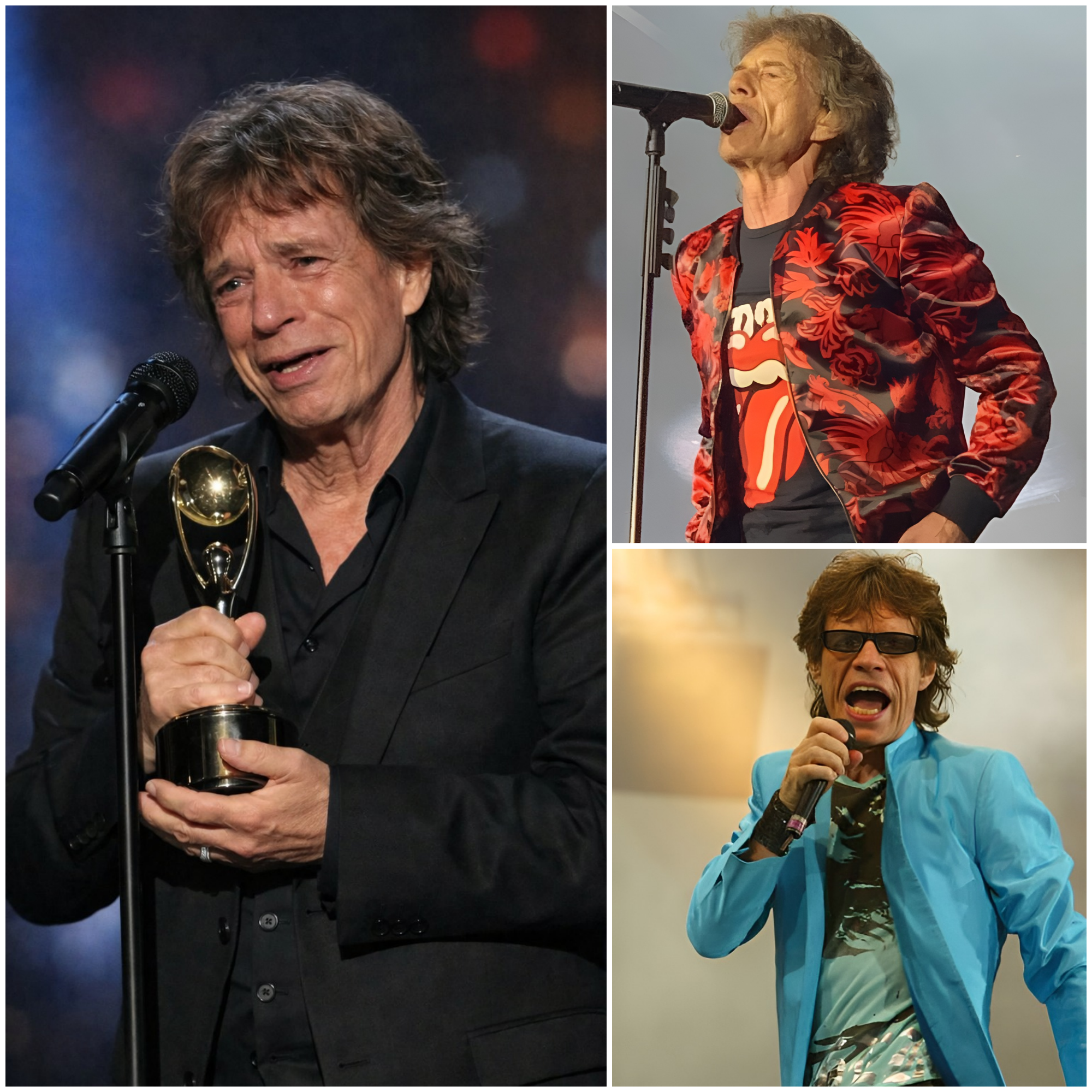
The Sound That Changed Everything
From a young age, Jagger was drawn to music—specifically American blues and early rock 'n' roll. Artists like Chuck Berry and Little Richard didn't just influence him; they awakened something deeper. Their music carried energy, rebellion, and emotion that stood in stark contrast to the structured world he was expected to follow.
Music, for Jagger, was not just entertainment.
It was escape.
It was identity.
It was possibility.
A Chance Encounter That Rewrote History
The turning point came in a moment that seemed almost insignificant at the time. On a train platform, Jagger ran into a childhood acquaintance—Keith Richards.
What followed was a conversation about music, particularly their shared passion for American blues. That conversation quickly evolved into collaboration. They began playing together, exchanging ideas, and building something that neither of them could have fully imagined at the time.
It was the beginning of a partnership that would define an era.

Soon after, along with other musicians, they formed what would become The Rolling Stones.
Early Struggles and a Search for Identity
In their earliest days, The Rolling Stones were far from the global phenomenon they would later become. They performed in small clubs, often playing cover versions of blues tracks. Their sound was still developing, their identity still forming.
But one thing was already clear: Mick Jagger was different.
On stage, he didn't behave like traditional performers. He moved with intensity, unpredictability, and a kind of raw confidence that drew attention immediately. His voice carried emotion, but it was his presence that truly captivated audiences.
He wasn't just singing songs.
He was living them.

The Breakthrough That Defined Rock
The true transformation came when Jagger and Richards began writing their own music. This shift from performing covers to creating original material marked a critical turning point.
Songs like (I Can't Get No) Satisfaction didn't just become hits—they became cultural statements. The music was louder, bolder, and unapologetically rebellious. It captured the mood of a generation that was questioning norms and searching for a new identity.
With that, The Rolling Stones were no longer just a band.
They were a movement.
The Birth of a Rock Icon
As the band's fame grew, so did Mick Jagger's influence. He became more than a frontman—he became a symbol of rock 'n' roll itself. His stage presence redefined what it meant to perform. His movements, his attitude, and his fearless energy set a new standard that countless artists would later follow.

What made Jagger unique was not just his talent, but his ability to evolve. Even as trends changed and decades passed, he adapted without losing the essence of what made him iconic in the first place.
A Legacy That Continues to Resonate
Over the years, Mick Jagger has remained one of the most enduring figures in music. While many artists fade, he has continued to perform with remarkable energy, maintaining a connection with audiences across generations.
His journey—from a student on a predictable path to one of the most recognizable faces in rock history—is a testament to risk, passion, and the willingness to step into the unknown.
More Than a Career—A Cultural Impact
Today, Mick Jagger's influence extends far beyond music. He represents a shift in culture, a breaking of boundaries, and a redefinition of artistic expression. His work with The Rolling Stones helped shape not only rock music, but the broader cultural landscape of the modern world.
And perhaps the most remarkable part of his story is how it all began.
Not with fame.
Not with certainty.
But with a moment.
A meeting on a train platform.
A shared love for music.
A decision to follow something uncertain.
👉 And in that single moment, Mick Jagger didn't just change his own life—he helped change the sound of an entire generation.