

A Moment That Felt Different
Concert crowds are rarely quiet. Even during the slowest ballads, there is usually the glow of phones, the murmur of thousands of voices, and the restless movement of people trying to capture a memory.
But during a recent performance, something unusual happened when George Strait stepped into the spotlight and glanced toward the audience where his wife, Norma Strait, was seated.
The music continued as expected, the band steady behind him. Yet fans in the arena say the atmosphere changed. The confident stage presence that has defined Strait's career for decades seemed to soften. For a brief moment, the larger-than-life figure known as the "King of Country Music" looked less like a legend and more like a man remembering where it all began.
What unfolded was not a dramatic speech or a planned tribute. It was quieter than that—a look, a pause, and a song delivered with unusual tenderness.
The Woman Behind the Legend
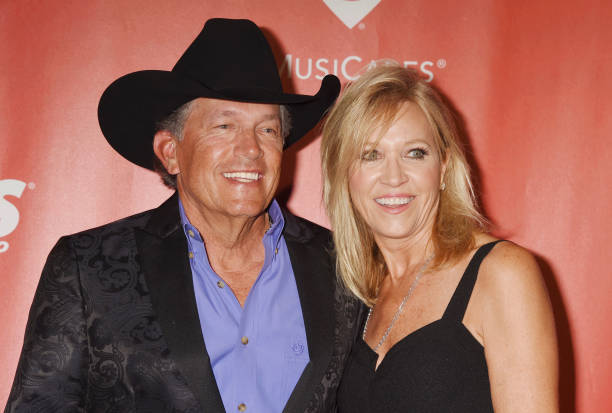
Norma Strait has rarely sought the spotlight. Throughout George Strait's more than forty-year career, she has maintained a largely private presence, appearing occasionally at events but generally avoiding the media attention that surrounds one of country music's most recognizable voices.
Yet within Strait's personal story, Norma has always been central.
The couple met as teenagers in Pearsall, Texas, long before fame entered the picture. Their early relationship carried the kind of uncertainty that often comes with young love. Strait has said in past interviews that he had to convince Norma to give him a chance after their initial dating period ended.
Eventually, the two reunited—and in 1971 they made a decision that would define the rest of their lives. With little money and no guarantee of the future, they eloped to Mexico.
At the time, George Strait was still years away from becoming a country music icon. He was simply a young Texan with a dream of making music and the determination to build a life with the woman he loved.
A Life Built Through Highs and Lows
Over the next five decades, their marriage endured experiences that few couples ever face.
Strait joined the United States Army shortly after their marriage, serving in Hawaii. During that period he began performing with a military-sponsored band, an early step in the musical journey that would later define his life.
By the early 1980s, that journey had transformed dramatically. Strait's traditional country sound began dominating the charts, launching a career that would eventually include dozens of No. 1 hits, record-breaking tours, and a place among the most influential artists in country music history.
Yet fame did not shield the family from tragedy.
In 1986, the Straits experienced unimaginable loss when their daughter Jenifer Strait died in a car accident at the age of 13. The grief reshaped the family's life and pushed George Strait even further away from the public spotlight outside his music.
Friends and colleagues often say Norma played a crucial role during that period—helping hold the family together as Strait continued performing while carrying profound personal loss.
Why the Moment Felt So Powerful

Given that history, the moment during the concert carried emotional weight beyond a simple onstage gesture.
Those in attendance say the way Strait looked toward Norma suggested more than acknowledgment. It reflected decades of shared experiences: the early years in Texas, the long road trips between shows, the quiet life they protected away from the cameras, and the resilience that carried them through tragedy.
For many fans, the significance was immediate.
The applause softened. Some people stopped filming. The enormous arena briefly felt smaller, as if the thousands of spectators recognized they were witnessing something personal rather than performative.
Instead of a superstar entertaining a crowd, the scene felt like a husband singing to the woman who had stood beside him since the beginning.
A Marriage Rare in the Entertainment World
Longevity in celebrity relationships is often difficult. Touring schedules, media attention, and constant travel can place immense strain on families.
Yet George and Norma Strait's marriage has endured more than five decades.
Part of that durability, observers say, comes from the couple's consistent effort to keep their private life separate from the machinery of fame. Strait has frequently spoken about maintaining a home life grounded in routine, family traditions, and time away from the public eye.
Norma, meanwhile, has remained an anchor point—a steady presence behind the scenes while Strait's career expanded to arenas and stadiums around the world.
A Reminder Behind the Music

George Strait's songs often revolve around themes of loyalty, love, and devotion. Hits like "I Cross My Heart" and "Check Yes or No" have become anthems for weddings and relationships across generations.
Fans have long believed those songs carry authenticity precisely because the emotions behind them are real. Strait has never treated romance as a marketing theme—it has always been connected to his own life story.
The quiet moment during the concert reinforced that belief.
It reminded fans that behind the iconic voice and legendary catalog stands a personal history built on commitment, resilience, and shared memory.
When the Crowd Fell Silent
Concerts are designed to create spectacle—lights, sound, and the collective excitement of thousands of people singing together.
But sometimes the most powerful moments happen when all of that fades.
For a few minutes that night, the audience witnessed something simple: a man acknowledging the woman who had been part of his life since long before the fame arrived.
There were no fireworks, no dramatic declarations, and no elaborate staging.
Just a glance, a song, and the quiet understanding that the story behind the music might be just as meaningful as the music itself.
For fans who watched it unfold, the moment offered a reminder that George Strait's greatest duet may not be a recording at all.
It may be the life he and Norma built together—one that began with two young Texans crossing the border to get married and has lasted more than half a century.