

A Different Kind of Presence
In moments of national difficulty, public figures often step forward with words of support—appearing on television, posting messages, or aligning themselves with visible causes. For many, that visibility is where the involvement ends.
Willie Nelson has long taken a different approach.
Rather than limiting his role to statements or appearances, Nelson has spent decades engaging directly with communities facing hardship—often in ways that attract little attention but carry lasting impact. His work, particularly through initiatives such as Farm Aid, reflects a sustained commitment that extends far beyond the stage.
The Origins of Farm Aid

The most visible example of Nelson’s efforts is Farm Aid, an organization he co-founded in 1985 alongside fellow musicians John Mellencamp and Neil Young. The initiative was created in response to a growing crisis among American farmers, many of whom were facing financial collapse due to rising debt and changing economic conditions.
At a time when the issue received limited national attention, Farm Aid sought to provide both immediate support and long-term advocacy. The annual benefit concerts, which Nelson has consistently headlined, have raised millions of dollars to assist family farms and promote sustainable agriculture.
For Nelson, the project was not a one-time response. It became an ongoing commitment—one that continues to define a significant part of his public life.
Beyond the Concert Stage
While Farm Aid remains the most prominent aspect of his activism, Nelson’s involvement in community support extends beyond organized events. Over the years, he has participated in numerous benefit concerts, disaster relief efforts, and local initiatives aimed at providing assistance to those in need.
These appearances often take place outside major media coverage, in settings that lack the visibility of large-scale productions. Small towns, regional venues, and community gatherings have all been part of his outreach.
In these environments, the focus shifts away from performance as spectacle and toward performance as connection. Nelson’s presence in such settings reflects an understanding of music as a tool for engagement rather than simply entertainment.
A Consistent Philosophy

Central to Nelson’s approach is a belief that music carries responsibility. Throughout his career, he has emphasized the idea that songs can do more than entertain—they can bring people together, raise awareness, and contribute to tangible change.
This philosophy is evident in both his artistic work and his public actions. His songs often explore themes of resilience, hardship, and shared experience, while his off-stage efforts reinforce those themes through direct involvement.
Unlike many public figures who align with causes intermittently, Nelson’s engagement has been consistent. It is not tied to specific moments or events, but integrated into the broader trajectory of his career.
Public Perception and Criticism
As with any form of public engagement, Nelson’s efforts have not been without criticism. Some observers have questioned the role of artists in addressing social and economic issues, while others have debated the effectiveness of benefit-driven initiatives.
However, such criticism has not significantly altered his approach. Nelson has rarely positioned himself as a spokesperson or authority. Instead, he has focused on participation—using his platform to support causes while allowing the work itself to speak.
For many supporters, this distinction is important. It frames his involvement not as advocacy from a distance, but as direct contribution.
Impact Measured Over Time
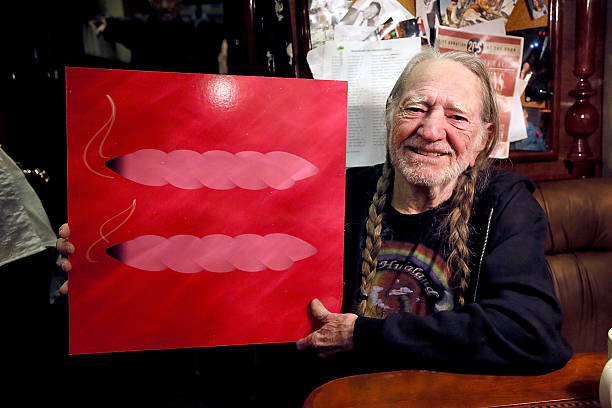
The impact of Nelson’s efforts is best understood over the long term. Since its inception, Farm Aid has raised tens of millions of dollars, providing grants and resources to farmers across the United States. The organization has also played a role in shaping public awareness of agricultural issues, influencing both policy discussions and consumer behavior.
Beyond financial contributions, the initiative has created a sustained platform for dialogue—bringing together artists, farmers, and audiences in a shared space.
This long-term perspective distinguishes Nelson’s work from more short-lived forms of engagement. It reflects a commitment to continuity rather than immediate visibility.
The Role of Personal Experience
Nelson’s connection to these issues is not purely abstract. Raised in rural Texas, he has long maintained ties to the agricultural communities that shaped his early life. This background informs his understanding of the challenges faced by farmers and contributes to the authenticity of his involvement.
His advocacy, therefore, is not an extension of celebrity, but a reflection of personal history. It bridges the gap between his identity as an artist and his connection to the communities he supports.
A Broader Cultural Context
Nelson’s approach also reflects broader questions about the role of public figures in society. In an era where visibility is often equated with impact, his work suggests an alternative model—one that prioritizes sustained engagement over immediate recognition.
This model challenges conventional expectations. It demonstrates that influence can be exercised quietly, through consistent action rather than high-profile gestures.
For the music industry, it offers a perspective on how artists can engage with social issues without compromising their creative identity.
Recognition and Meaning

Over the years, Nelson has received numerous awards and honors recognizing both his musical achievements and his contributions to various causes. Yet these forms of recognition appear secondary to the work itself.
For those directly affected by his efforts—farmers, communities, and individuals—the impact is measured less in accolades and more in outcomes. Financial support, increased visibility, and a sense of solidarity represent tangible results that extend beyond symbolic recognition.
A Legacy Beyond Music
Willie Nelson’s legacy is often defined by his contributions to country music, his songwriting, and his influence on subsequent generations of artists. However, his work outside of music represents an equally significant dimension.
It illustrates how an artist’s role can extend into areas that are not immediately associated with performance. It also highlights the potential for creative platforms to support broader social objectives.
Conclusion: Presence Over Visibility
In a cultural environment where public engagement is often measured by visibility, Willie Nelson’s approach stands apart. His work demonstrates that presence—consistent, direct, and often understated—can have a lasting impact.
Rather than relying on moments of attention, he has built a model based on continuity. It is a model that emphasizes action over statement, and commitment over recognition.
As his career continues, this aspect of his legacy remains central. It reflects not only what he has achieved as an artist, but how he has chosen to use that position.
And in doing so, Willie Nelson offers a reminder that influence is not always defined by what is seen—but by what is done, over time, and often without expectation of acknowledgment.