

Chris Stapleton has spent years standing beneath some of the brightest lights in country music.
He has played enormous stages.
He has accepted major awards.
He has watched thousands of people sing his songs back to him.
But when the conversation turns toward the things that truly matter, the image becomes much quieter.
A home.
A wife.
Children.
And the people who were there long before the world knew his name.
That private side of Stapleton has always been an important counterpoint to his public career.
He became one of country music’s most recognizable voices without turning his family into a permanent part of the spectacle. Stapleton and his wife, singer-songwriter Morgane Stapleton, married in 2007 and have five children. They have also made a deliberate effort to keep their children’s lives largely away from the spotlight.
For an artist whose voice can fill an arena, that choice says something.
The stage may be where the world sees Chris Stapleton.
But home is where the person behind the music exists without the microphone.
That distinction has become increasingly meaningful as his career has grown.
Stapleton’s rise to stardom was anything but immediate.
Before Traveller changed the trajectory of his career in 2015, he had spent years working as a songwriter and musician in Nashville. He wrote songs for other performers, played in bands and developed the kind of reputation that musicians respect long before mainstream audiences recognize a name.
Morgane was part of that world too.
The couple met while working at neighboring publishing companies, both pursuing music careers. Their relationship grew from a shared understanding of songwriting and the unpredictable life that comes with trying to make music for a living.
That history matters.
Morgane didn’t simply meet the superstar version of Chris Stapleton.
She knew the songwriter before the awards.
She knew the musician before the sold-out arenas.
She knew the person during the years when success was still a question rather than a certainty.
And eventually, she became one of the most important creative voices in his career.
Morgane has contributed harmony vocals and creative input to Stapleton’s recordings, including his debut album Traveller. She has also been involved in the production of his later work, including Higher.
That makes their relationship unusual in an industry where professional partnerships can easily become complicated by fame.
For the Stapletons, music has often been something they share rather than something that separates them.
Onstage, their voices can blend almost effortlessly.
Offstage, they have built a family life that remains intentionally private.
And perhaps that is why the emotional center of Stapleton’s music often feels so grounded.
His songs are filled with subjects that require vulnerability.
Love.
Loss.
Regret.
Faith.
Family.
Starting again.
He doesn’t sing as though every problem has an easy answer.
Instead, his music often acknowledges that life can be messy.
Sometimes people lose things.
Sometimes relationships become complicated.
Sometimes the road ahead is uncertain.
But there can still be beauty in continuing.
That emotional honesty has become one of the defining characteristics of his career.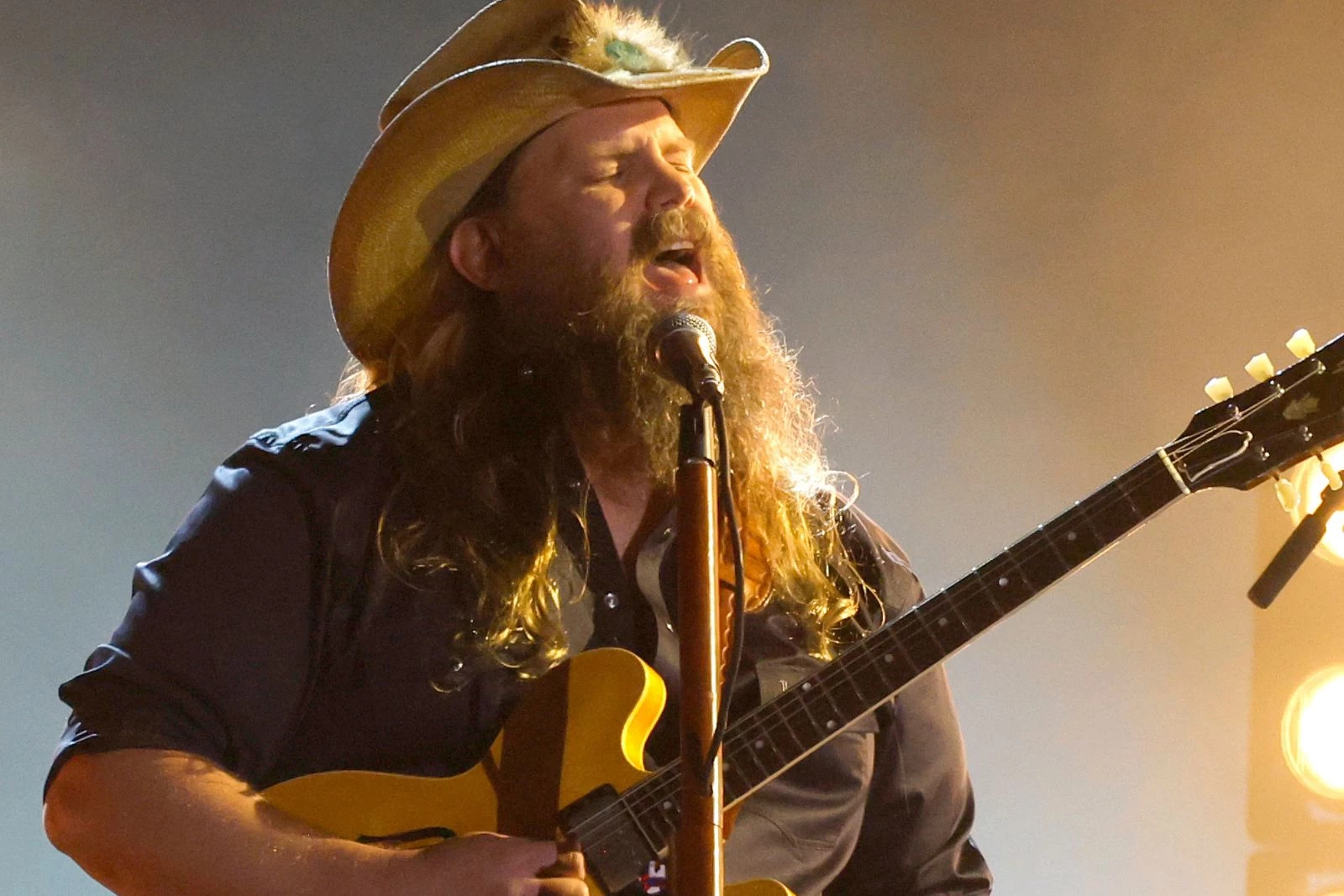
Consider “Starting Over.”
The song does not present a new beginning as something simple.
Starting over requires courage.
It requires accepting uncertainty.
It requires believing that another chapter can be better even when there is no guarantee.
That idea feels especially powerful when placed beside Stapleton’s own career.
He spent years building toward something that didn’t arrive immediately.
Then, when Traveller finally broke through, the world suddenly discovered what Nashville musicians had known for years.
The voice was real.
The songwriting was real.
The work behind it was real.
Success did not create the artist.
It revealed him.
And through all of that change, family remained an important anchor.
Stapleton has spoken publicly about the importance of being a husband and father while also maintaining a demanding career. In 2025, he described his life as a husband and father with gratitude, while continuing to protect his family’s privacy.
That privacy has become part of his identity.
His children are not props for publicity.
They are not characters in a promotional campaign.
They are simply his children.
Stapleton has explained the reasoning behind keeping them out of much of the public eye: he chose the entertainment life, but they did not.
There is something profoundly human about that decision.
Fame can make almost everything visible.
Stapleton has chosen to keep one part of his world deliberately unseen.
That doesn’t make the family less important.
It suggests the opposite.
Some things are valuable precisely because they belong only to the people living them.
And that may be the quiet lesson behind Stapleton’s story.
A career can be measured publicly.
A family cannot.
Awards can be counted.
Love cannot.
A sold-out concert can be photographed.
A quiet evening at home usually cannot.
Yet those private moments may ultimately matter more.
For someone who spends much of his professional life traveling, performing and living according to a demanding schedule, home becomes more than a physical place.
It becomes a return point.
A place where there is no expectation to perform.
No need to hit the perfect note.
No need to impress anyone.
Just life.
That contrast may also explain why Stapleton’s performances can feel so emotionally intimate.
Even when he sings to thousands of people, there is often a sense that he is speaking about something personal.
His music doesn’t require listeners to know every detail of his private life.
It only requires them to recognize the emotions.
A husband missing his family.
A parent watching children grow.
A person wondering whether starting again is possible.
Someone remembering a love that changed everything.
Those feelings belong to everyone.
And perhaps that is why Stapleton has become such a powerful figure in modern country music.
He doesn’t need to reveal every part of himself to create intimacy.
He simply needs to tell the truth inside the song.
The public may remember the awards.
Fans may remember the stadiums.
Music historians may remember the records.
But behind all of those accomplishments is a quieter story.
A man who spent years chasing music.
A woman who understood the songwriter before the world knew the star.
A family deliberately protected from the noise.
And a career built around songs that continue to make people feel something real.
The lights will always eventually fade.
Every concert ends.
Every award ceremony comes to a close.
The crowd eventually leaves.
But home remains.
And for Chris Stapleton, perhaps that is the most important part of the story.
Not the size of the stage.
Not the number of awards.
Not even the fame.
Just the people waiting beyond the spotlight.
Because the strongest voices aren’t always the ones that fill the biggest rooms. Sometimes they belong to the people who know when to leave the stage, go home, and remember what truly matters.


